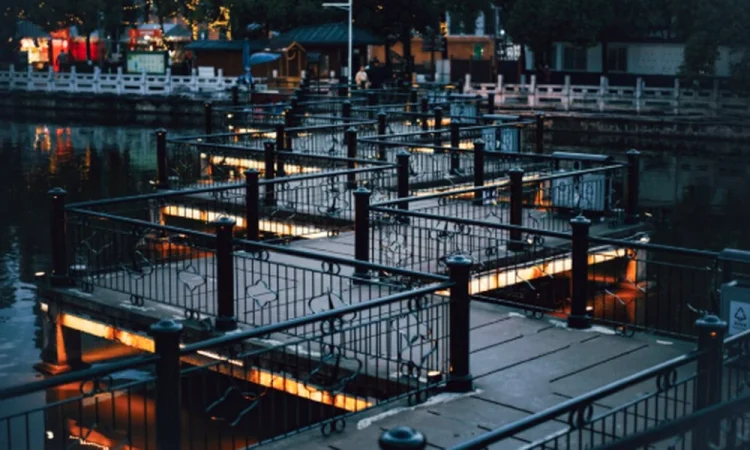
A well-lit dock gives you more ways to enjoy the waterfront after sunset. You might want a quiet place to sit, a welcoming space for guests, or a clearer path back from the boat. The right lighting starts with how you use that space.
Custom dock lighting can highlight steps, frame a seating area, and bring out the details of your dock. But more light is not always better. Bright, exposed bulbs can create glare and take attention away from the water.
For Florida waterfront homes, a thoughtful lighting plan should also account for salt exposure, rain, dock movement, and nearby wildlife. These ideas can help you plan a dock that feels comfortable, looks polished, and works for everyday use.
Key Takeaways
- Start with walkways, steps, and boarding areas.
- Use soft, directed lighting to reduce glare.
- Choose fixtures suited to their actual waterfront exposure.
- Treat solar lights as supplemental lighting unless their performance meets your needs.
- Check local lighting requirements, especially near sea turtle nesting beaches.
- Have a qualified electrician plan and install dock electrical systems.
What Makes a Dock Lighting Design Feel Luxurious?
A luxury dock does not need a light on every post. A few well-placed fixtures can create a more inviting space than a bright row of exposed bulbs.
Think about lighting in three layers:
- Access lighting helps people see walking routes and changes in level.
- Task lighting serves areas where you handle lines, gear, or other equipment.
- Accent lighting adds character around seating and architectural details.
These layers should work together. For example, your walkway may need steady illumination while the seating area uses a softer, dimmable glow. Separate controls let you adjust each area without lighting the entire dock.
10 Custom Lighting Ideas for Your Dock
1. Recessed Walkway and Step Lights
Small recessed fixtures can light the walking surface while keeping the dock’s appearance clean. Consider them near stairs, gangway transitions, and changes in deck level.
Position the lights so people can see where they are stepping without looking directly into the bulbs. Fixtures installed in walking surfaces also need to be suitable for foot traffic and the expected water exposure.
2. Shielded Post and Piling Lights
Post lights can give a dock a tidy, consistent look. Choose a style that works with the home’s outdoor fixtures, whether that means a simple modern shape or a more traditional finish.
Downward-facing, shielded designs help direct light onto the deck. Keep fixtures clear of cleats, lines, and places where boats may make contact.
Matching fixtures can provide visual consistency, but their spacing should follow the dock’s layout and lighting needs.
3. Concealed Lighting Beneath Benches and Rails
Hidden lighting can add a soft glow around built-in seating or beneath suitable rail details. This approach lets the dock’s materials and shapes stand out without making the fixture itself the main feature.
Use lighting products intended for the location. A strip, its power supply, and its connections all need appropriate protection. An outdoor label alone does not establish suitability for salt spray or submersion.
4. Focused Lighting for Boarding and Gear Areas
A small task light can be useful where you handle dock lines, load equipment, or step between the dock and a boat.
Aim it at the working surface and check the view from both the dock and the vessel. A light that seems comfortable from shore may shine directly into someone’s eyes as they approach by water.
Give these fixtures their own switch so they can be used when needed.
5. Soft Lighting Around Seating Areas
A seating area benefits from comfortable, even light. Shielded fixtures near benches or a covered lounge can create a relaxed setting for conversation.
Test the lighting from a seated position. Bulbs hidden from someone standing may still be visible at eye level when they sit down.
Where local conditions allow, warm white light can suit a relaxed outdoor setting. Near protected beaches, fixture and light-source choices need a separate wildlife review.
6. Outdoor String Lights in Suitable Locations
String lights can bring a casual feel to a covered seating space. They work best when supported by a structure designed to carry them and kept clear of walking routes and boat access.
Avoid loose cords, low-hanging bulbs, and improvised connections. Select products suitable for the exposure and have their power supply planned properly.
This idea is not suitable for every waterfront. Decorative lights visible from sea turtle nesting beaches can create problems, so review the location before including them.
7. Solar Accent Lights
Solar lights can add small points of light without extending electrical wiring to each fixture. Post caps and low-profile markers may work in sunny parts of the dock.
Their usefulness depends on sunlight, shading, battery condition, and operating time. Check the manufacturer’s specifications and observe performance at the site.
For a dock used late at night, do not assume a solar marker will provide reliable lighting until morning. Make sure essential access areas have dependable illumination.
8. Underwater Lighting Where Appropriate
Underwater fixtures can create a subtle glow around a dock, but they need careful planning. Water clarity, depth, fixture placement, and maintenance access all affect the result.
Use fixtures specifically designed for submerged use and the site’s water conditions. Review environmental restrictions before choosing colors or locations.
Underwater lights should not be presented as a way to make swimming near a powered dock safe. The Electrical Safety Foundation advises against swimming near docks and boats because of electrical hazards.
9. Motion-Activated Entrance Lighting
A motion light near the shore entrance can help illuminate the access route when someone approaches.
Choose a shielded fixture and adjust its detection area so normal dock activity does not cause unnecessary switching. A short, practical run time can limit light spill.
Use motion control as part of the overall plan. People already on the dock should not be left in darkness because a sensor no longer detects them.
10. Timers, Dimmers, and Smart Controls
Separate controls make lighting easier to use. You might want one setting for evening guests, another for boarding, and a simple setting for the walk back to shore.
- Timers for routine operating hours.
- Dimmers for compatible seating-area fixtures.
- Separate switches for access and task lighting.
- Remote controls or app access.
Check wireless coverage before relying on an app. Include an accessible local control, and make sure timers or automatic settings do not interrupt needed lighting.
What Should Florida Dock Owners Consider Before Installation?
Salt, Rain, and Maintenance Access
Choose fixtures based on the conditions they will face. A sheltered fixture above the deck has different needs from one exposed to regular splashing or continuous submersion.
Ask about corrosion resistance, mounting hardware, seals, cleaning, and replacement parts. Also consider how someone will reach the fixture for maintenance. A hidden light loses some of its appeal if routine service requires removing large sections of decking.
Floating Dock Movement
On a floating dock, the lighting plan needs to account for movement at gangways and connections.
Have the installer assess cable routes and mounting points across the dock’s expected movement. Wiring should not be stretched, pinched, or left where it can become a trip hazard. Plan this work alongside the dock layout.
Electrical Safety
Have a licensed electrician with dock experience assess the power supply, protective devices, wiring, and connections. Low-voltage lighting still needs equipment suitable for its location and proper installation.
Electrical faults near water can have serious consequences. Arrange professional inspections and address damaged equipment promptly.
Wildlife and Local Lighting Rules
If lighting could reach a sea turtle nesting beach, check the applicable local ordinance before buying fixtures. Florida Fish and Wildlife Conservation Commission guidance emphasizes low mounting, long-wavelength light, and shielding.
A warm white bulb or a color-changing light set to amber does not automatically meet FWC wildlife-lighting criteria. Select the appropriate light source and fixture together.
How Can You Keep the Design Simple?
Begin with the route people actually use. Mark the entrance, walking path, changes in level, and boarding areas. Then add the lighting needed for seating and occasional tasks.
Review the plan after dark, from the house, the dock, and the water where practical. Look for glare, uneven patches, and light spilling beyond the intended area.
A restrained design can still feel special. Often, the most useful adjustment is changing where a light points or lowering its brightness.
Plan Your Dock with Supreme Floating Docks
Lighting works best when it is considered alongside the dock’s layout, seating, and access points.
Contact Supreme Floating Docks to discuss your waterfront project and the lighting features you would like to include. Share how you use the space, where you need better visibility, and the style you have in mind.
A clear plan helps coordinate the dock design, suitable fixtures, and electrical work so the finished space feels comfortable and easy to use.
Frequently Asked Questions
What is the best lighting for a luxury dock?
The best choice depends on the layout and how you use it. A useful starting point is shielded walkway lighting, focused task lights, and soft lighting around seating.
Are solar lights enough for a dock?
They may work for accents or markers, but performance varies. Confirm that they provide enough light for the hours and conditions in which you use the dock.
Can I add lighting to an existing floating dock?
It may be possible. Have the dock’s structure, movement, power supply, and mounting options assessed before choosing fixtures.
Are underwater lights suitable for every Florida dock?
No. Suitability depends on the site, electrical design, environmental requirements, and maintenance needs. Review these factors before installation.
Does dock lighting increase property value?
Thoughtful lighting may improve the dock’s appearance and usefulness, but a specific increase in property value should not be promised.
This post was written by a professional at Supreme Marine Floating Docks. Supreme Marine Floating Docks is dedicated to providing top-quality floating docks and marine accessories that combine durability, innovation, and superior performance. While we are a new brand, our team brings over 50 years of combined industry experience, making us a trusted name in the marine world. We are passionate about designing and delivering products that meet the highest standards, ensuring reliability and longevity in all marine environments. Whether for residential, commercial, marina docks Palm Beach, our docks are crafted with precision and care, setting a new benchmark in the industry. At Supreme Marine, we don’t just build docks-we create lasting solutions.