
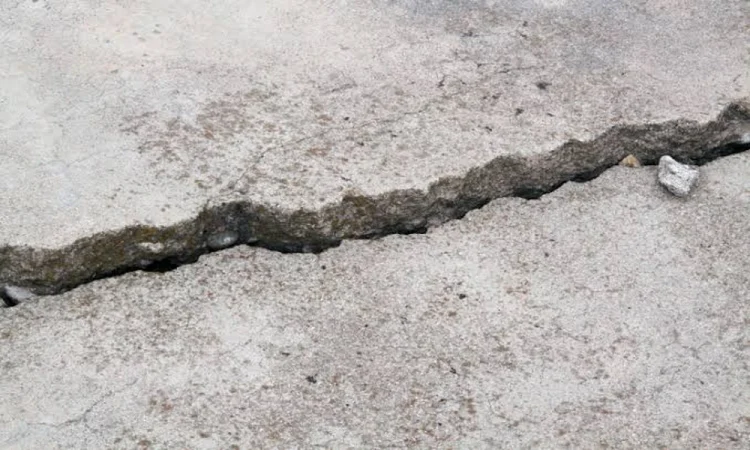
Almost every concrete surface around a house will crack at some point. Driveways, patios and front walks all shrink as they dry, move with the temperature, and sit on ground that never stays perfectly still. So a line across a slab, on its own, tells you very little. What matters is whether that line lives in the concrete itself or is a message coming up from the soil and base underneath, because those two situations lead to completely different fixes and very different bills.
People who have spent decades on the tools tend to read cracks the way a good mechanic reads tire wear. With 32 years in the trade and a fourth generation of concrete work behind it, the Hemet crew at KISSconcrete Inc. is upfront that a slab sitting flat on a stable base usually needs a repair rather than a teardown, and that when the ground has failed, the base gets rebuilt before any new concrete goes down. That second point carries real weight across Southern California, where expansive clay sits under a good share of residential lots.
Lines That Come With the Territory
Concrete loses water as it cures, and losing water means losing a little volume. Since the slab is stuck to the ground below it and can’t slide freely, that shrinkage pulls it apart somewhere. Control joints exist to choose somewhere. When a crack runs neatly along the bottom of a sawcut or tool joint, the slab is doing exactly what it was designed to do.
A few other crack types are mostly cosmetic too. Crazing is that fine web of shallow lines that looks like a dried riverbed, usually caused by the top skin drying faster than the concrete beneath it or by overworking the surface during finishing. Plastic shrinkage cracks show up within hours of a pour on hot, dry, windy days, often short and parallel to one another. Hairlines that wander between joints with no height difference across them rarely threaten anything beyond appearance.
None of these mean the slab is failing. They can let water in over time, and water is what eventually turns a harmless line into a spalled, crumbling edge, but the structure underneath is fine.
When the Soil Starts Talking
The cracks worth worrying about are the ones the ground creates. Clay rich soil absorbs water and swells, then dries and shrinks, and it does this every year with the seasons. Where a sharp wet season follows a long dry one, that cycle can lift one corner of a slab in winter and drop it again by late summer. A slab can tolerate some of that. It can’t tolerate it unevenly forever.
A base that was dumped and raked flat instead of placed in compacted lifts will settle under the weight of a car. A downspout emptying beside a driveway can wash fines out from under the edge until the concrete is bridging over a void. Tree roots lift walkways, and thirsty trees pull moisture from clay so the soil shrinks away beneath the slab.
If you want to know what you are building on, the USDA’s Web Soil Survey lets you draw a box around your property and pull up soil data, including shrink and swell ratings. It won’t diagnose a particular crack, but it tells you whether the ground in your neighborhood has a reputation.
Five Clues Worth Kneeling Down For
Sorting one kind of cracking from the other takes no special tools, just a few minutes on your knees.
- Check the width. A crack you can barely slip a fingernail into is usually shrinkage. One wide enough to swallow the edge of a coin, roughly a quarter inch or more, deserves a closer look at what is happening below.
- Run your hand across it. If one side sits higher than the other, the slab has moved vertically, and something underneath allowed that.
- Follow its path. Random hairlines and map patterns point toward the surface. A single long diagonal running from a corner, or several cracks fanning out from one spot, suggests a load or a soft area the slab couldn’t bridge.
- Tap around it. A hollow, drummy sound when you knock on the concrete with a hammer handle often means there is air where soil used to be.
- Look at the surroundings. Puddles that never used to form, a gap opening at the edge of the slab, a garage door that suddenly doesn’t seal at one end, or soil visibly pulled back from the concrete all point to movement below.
Matching the Fix to the Diagnosis
A cosmetic crack gets a cosmetic answer. Cleaning it out and filling it with a flexible sealant keeps water and grit from getting in, and sealing the whole surface slows down further deterioration. Crazing that bothers you visually can be handled with resurfacing or a bonded overlay, provided the old surface is properly prepared and a bonding agent is used. Patches troweled onto dusty concrete tend to let go within a season.
A slab that moved once but has since stabilized sits in the middle. Grinding down a lip can make a walkway safe again. Lifting a sunken section with injected grout or polyurethane foam can bring it back to level if the concrete itself is still in one sound piece.
Replacement makes sense when the base has given out or the slab is broken into loose plates that rock underfoot. Here the important thing is not the new concrete but what goes under it. Pouring fresh on the same failed ground tends to produce the same crack in roughly the same place a few years later. The soft material has to come out, the base needs the right gradation of rock placed and compacted in layers, reinforcement has to sit where it is meant to rather than lying in the dirt, and joints need to be laid out so the next round of shrinkage has a planned path.
Give It a Season Before You Spend
If you are unsure which category a crack belongs to, time is a surprisingly good diagnostic tool. Mark both ends with a pencil line, measure the width at a couple of points, and write down the date. Check again after the rains and at the end of summer. A crack that stays the same is almost certainly old news. One that grows, or opens in dry months and closes when the ground is wet, is tracking the soil.
That same season of watching is a good chance to fix the cheap things. Extending downspouts away from the slab, adjusting sprinklers so they water plants instead of concrete edges, and keeping thirsty trees at a sensible distance all reduce how much the ground under your flatwork swings back and forth. Sometimes that alone is enough to keep a modest crack modest for years, and when it isn’t, you will walk into any conversation about repair or replacement knowing exactly what your slab has been trying to tell you.